The Ultimate Guide to the 4 Phases of the Menstrual Cycle
What Are the 4 Phases of the Menstrual Cycle?
If you’ve ever wondered why your body feels different at different times of the month—sometimes energetic, other times craving rest or comfort foods—you’re not alone. Understanding the 4 phases of the menstrual cycle is key to making sense of these changes. Many people think the menstrual cycle is just about periods, but that’s only one part. Each phase has unique hormonal changes, effects on mood and energy, and ways you can support your body naturally.
Why Understanding the 4 Phases of the Menstrual Cycle Matters
Tracking and understanding your menstrual cycle isn’t just about knowing when your period will start. Here’s why it’s important:
- Understand your body: You’ll know why your energy, mood, and cravings fluctuate throughout the month.
- Manage productivity: Plan work, study, workouts, or social events around your natural energy cycles.
- Support fertility goals: If you’re trying to conceive or avoid pregnancy, knowing your fertile window is crucial.
- Promote overall health: Irregular cycles or unusual symptoms can be early signs of health issues.
For more ways to support your body, check out our blogs on Nutrition Tips for Women’s Fitness and Supplements for Women’s Health in India.
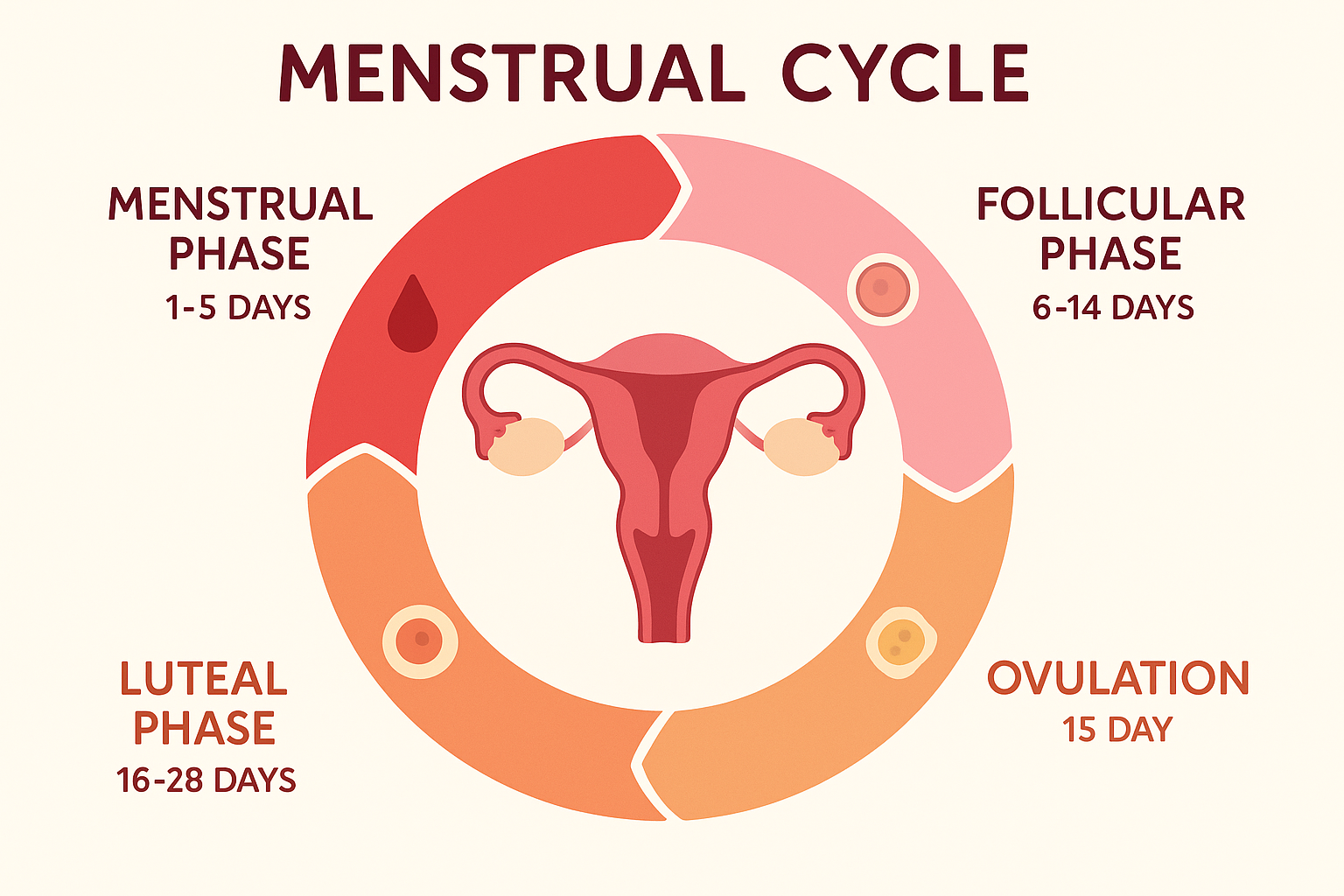
Phase 1: Menstrual Phase (Days 1–5)
The menstrual phase is the most familiar part of the cycle—it’s your period. During this phase, the uterus sheds its lining because pregnancy did not occur, causing bleeding. Hormones like estrogen and progesterone are at their lowest, which explains why energy can feel low and why cramps, fatigue, and mood swings are common.
How you might feel: Tired, emotional, crampy, bloated, or low in motivation. Everyone experiences it differently—some barely notice changes, while others need extra rest.
Tips for the menstrual phase:
- Prioritize self-care: Use heating pads, take warm baths, and allow yourself downtime.
- Gentle movement: Light yoga or walking can improve circulation and ease cramps.
- Nutrition: Iron-rich foods (spinach, beans, red meat) help replenish what’s lost during bleeding.
- Sleep: Extra rest supports hormone balance.
This phase is like winter—your body is resting and restoring. Remember, low energy is natural, and listening to your body is key.
Phase 2: Follicular Phase (Days 1–13)

The follicular phase begins on the first day of menstruation but continues after bleeding stops. It’s a phase of growth, renewal, and rising energy. Your brain releases follicle-stimulating hormone (FSH), stimulating your ovaries to develop follicles. One dominant follicle matures into an egg for potential ovulation. Estrogen gradually rises, rebuilding the uterine lining and boosting energy and mood.
How you might feel: Your energy starts increasing, mood improves, and mental clarity is high. Many people feel more social and motivated—perfect for starting new projects or planning activities.
Tips for this phase:
- Exercise: Higher energy is great for cardio, strength training, or new workout challenges.
- Nutrition: Lean proteins, fresh fruits, and leafy greens support rising estrogen and energy levels.
- Productivity: This is an ideal time to tackle creative or challenging work.
- Skin care: Rising estrogen can improve skin elasticity and glow.
Think of this phase as spring—your body is blooming, preparing for ovulation, and full of energy.
Phase 3: Ovulation Phase (Around Day 14)
Ovulation is the peak of your cycle—the moment your ovary releases a mature egg. Hormones like luteinizing hormone (LH) and estrogen peak, making you most fertile. Testosterone also rises slightly, increasing libido and confidence.
How you might feel: High energy, sociable, confident, and attractive. Some notice mild cramping (mittelschmerz) or light spotting.
Signs of ovulation:
- Clear, stretchy cervical mucus (like egg whites)
- Slight rise in basal body temperature
- Increased libido
- Enhanced mental focus
Tips for this phase:
- If trying to conceive: This is your fertile window. For contraception, use protection.
- Exercise: Peak energy supports intense workouts and outdoor activities.
- Social & work events: Confidence and mental clarity are at their highest—perfect for presentations or networking.
- Nutrition: Focus on fresh vegetables, fruits, and hydration to maintain energy.
Ovulation is like summer—bright, vibrant, and full of life.
Phase 4: Luteal Phase (Days 15–28)
The luteal phase begins after ovulation. The empty follicle transforms into the corpus luteum, producing progesterone to prepare the uterine lining for a possible pregnancy. If the egg isn’t fertilized, hormone levels drop, triggering menstruation.
How you might feel: Many experience PMS symptoms: mood swings, bloating, cravings, irritability, fatigue, or breast tenderness.
Tips for the luteal phase:
- Exercise: Gentle movement like yoga, swimming, or walking helps ease PMS symptoms.
- Nutrition: Magnesium-rich foods (nuts, seeds, dark chocolate) reduce bloating and mood swings.
- Self-care: Prioritize rest, journaling, or meditation to manage stress.
- Track symptoms: Noticing patterns helps you plan your schedule around energy dips.
Think of this phase as autumn—a winding down, reflection, and preparation for renewal.
Putting It All Together
| Phase | Days (approx.) | Hormones | Energy | Best For |
|---|---|---|---|---|
| Menstrual | 1–5 | Low estrogen & progesterone | Low | Rest, self-care |
| Follicular | 1–13 | Rising estrogen | Increasing | Starting new projects, workouts |
| Ovulation | ~14 | Peak estrogen & LH | High | Social events, fertility peak |
| Luteal | 15–28 | High progesterone → drops | Moderate → low | Reflection, gentle exercise, PMS care |
Common Questions About the Menstrual Cycle
1. How long is each phase? The menstrual phase lasts 3–7 days, the follicular phase around 10–13 days, ovulation typically 1 day, and the luteal phase 12–16 days, though cycles vary individually.
2. Can the cycle affect sleep or mood? Yes! Hormonal shifts influence serotonin and melatonin, affecting mood, sleep, and appetite. Tracking your cycle helps anticipate these changes.
3. Can tracking the cycle improve health? Absolutely. Awareness helps with fertility, PMS management, energy planning, and early detection of irregularities.
Additional Resources
For detailed medical information, visit Healthline’s guide on menstrual cycle phases and Mayo Clinic’s overview of the menstrual cycle.
Final Thoughts
The menstrual cycle is much more than just your period—it’s a monthly rhythm that impacts energy, mood, skin, digestion, and overall health. By understanding the 4 phases of the menstrual cycle—menstrual, follicular, ovulation, and luteal—you can align your life with your body’s natural rhythm, improve productivity, support fertility, and practice better self-care.
Embrace your cycle, notice patterns in your body, and work with it, not against it. With awareness and small adjustments, you can use the cycle to your advantage every month.